
Professional Teeth Whitening vs. At-Home Kits: What Actually Works
Teeth whitening has become one of the most requested cosmetic dental treatments, but the choice between professional treatment and at-home kits isn't always straightforward. You can walk into a drugstore and pick up whitening strips for under twenty dollars, or you can schedule an appointment with your dentist for a treatment that costs several hundred dollars. The difference in price raises an obvious question about whether the results justify the cost.
Professional teeth whitening typically delivers faster and more predictable results under supervised conditions, while at-home kits offer convenience and lower upfront costs but with more variable outcomes. The distinction goes beyond just effectiveness. Your individual dental health, the type of staining you're dealing with, and your sensitivity levels all play a role in which option makes sense for you.
Understanding how teeth whitening works in general helps you make an informed decision. Both methods rely on peroxide-based agents to break down stains, but they differ significantly in concentration, application method, and the level of customization available. This guide examines the practical differences between these approaches so you can choose the option that aligns with your expectations and dental needs.
Key Differences Between Professional and At-Home Teeth Whitening
Professional treatments use higher concentrations of bleaching agents and deliver results in a single visit, while at-home kits offer gradual whitening with lower-strength formulas you can apply on your own schedule.
How Teeth Whitening Works
Teeth whitening relies on bleaching agents that break down stains on your enamel. These agents penetrate the outer layer of your teeth and oxidize the molecules causing discoloration.
The process targets both surface stains from coffee, tea, and tobacco, as well as deeper discoloration from aging or certain medications. When the bleaching agent contacts your tooth enamel, it releases oxygen molecules that break apart the chemical bonds holding stain particles together.
Your teeth contain pores similar to your skin, and whitening agents enter these microscopic openings to lift stains from within. The intensity and speed of whitening depend on the concentration of active ingredients and how long they remain in contact with your teeth.
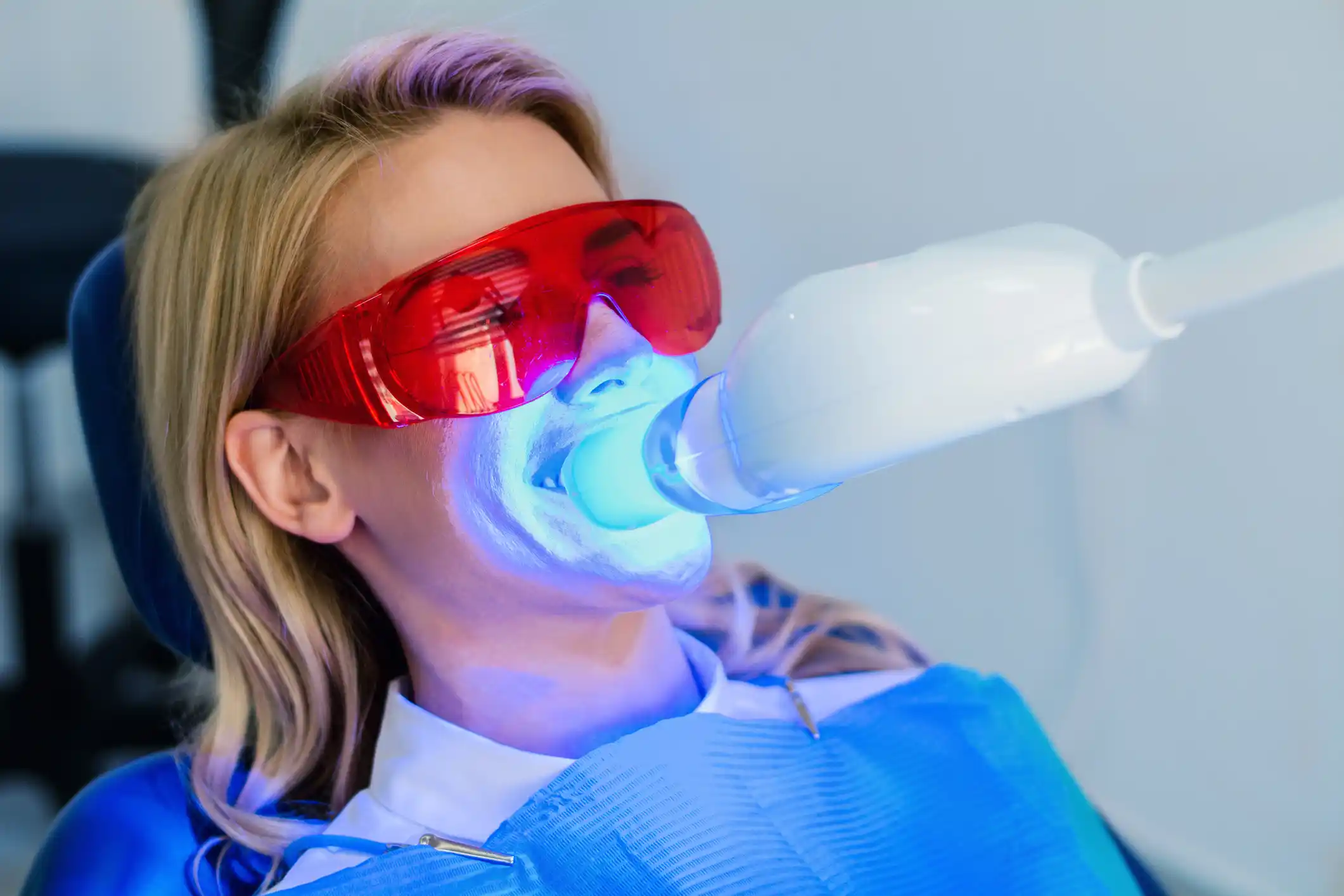
Temperature and light can accelerate this chemical reaction, which is why some professional treatments use specialized equipment to enhance results.
Professional In-Office Whitening Explained
In-office whitening treatments typically use 35% hydrogen peroxide or equivalent concentrations of carbamide peroxide. Your dentist applies a protective barrier to your gums before coating your teeth with whitening gel.
The procedure usually takes 60 to 90 minutes for a complete session. Many dental offices use LED lights or laser technology to activate the bleaching agent and speed up the whitening process.
You can expect your teeth to lighten by several shades in just one appointment. Dentists can customize the treatment based on your existing tooth color, sensitivity levels, and desired results.
The strength and supervision of professional whitening ensures even coverage and minimizes risks like gum irritation or uneven whitening. Your dentist monitors the entire process and can adjust the treatment if you experience discomfort.
Types of At-Home Whitening Kits
At-home whitening kits include several options with varying effectiveness levels:
Whitening strips are thin, flexible plastic coated with peroxide gel that you apply directly to your teeth for 30 minutes daily. They typically contain 6-10% hydrogen peroxide.
Whitening trays come as either pre-filled disposable trays or custom-fitted trays from your dentist that you fill with whitening gel. Custom trays provide better contact with your teeth and more consistent results.
Whitening pens let you paint gel directly onto individual teeth for spot treatment. They're portable but less effective for overall whitening.
Whitening toothpaste contains mild abrasives and low concentrations of peroxide to remove surface stains gradually over weeks of regular use.
Over-the-counter whitening products generally require two to four weeks of consistent use to achieve noticeable results. At-home teeth whitening kits offer convenience but demand patience and adherence to instructions.
Effectiveness, Safety, and Choosing the Best Option
Professional whitening results typically appear faster and more dramatically than at-home options, though both methods can effectively lighten teeth by several shades. Safety considerations, cost differences, and the type of discoloration you have will determine which approach works best for your needs.
Expected Whitening Results and Longevity
In-office teeth whitening delivers immediate results, often lightening your teeth by 3-8 shades in a single session. Professional treatments like Zoom whitening use higher peroxide concentrations under controlled conditions to achieve this rapid transformation.
At-home kits, whether from your dentist or over-the-counter whitening products, require consistent use over 1-3 weeks to reach comparable results. Professional at-home systems with customized trays provide better coverage and more predictable outcomes than generic strips or trays.
According to a systematic review of bleaching effectiveness, studies comparing professional and at-home methods found lower treatment recurrence when using at-home trays with carbamide peroxide gel. This suggests that while professional treatments work faster, at-home maintenance may extend your results longer.
Managing Tooth Sensitivity and Gum Irritation
Tooth sensitivity ranks as the most common side effect of teeth whitening procedures, though it's typically temporary. Research indicates that professional whitening cost includes not just the treatment but also higher rates of sensitivity compared to at-home methods, particularly with combined professional and at-home bleaching approaches.
Professional treatments minimize gum irritation through protective barriers applied to your soft tissues before bleaching begins. Your dentist can also incorporate desensitizing agents into the whitening gel or apply them immediately after treatment.
At-home systems carry more risk of uneven whitening and gum irritation if you don't follow instructions carefully. Generic trays from drugstores may allow gel to seep onto your gums, causing discomfort. Dentist-provided customized trays fit your teeth precisely to prevent this issue.
To reduce sensitivity:
- Use toothpaste formulated for sensitive teeth two weeks before whitening
- Space out your whitening sessions if using at-home products
- Avoid extremely hot or cold foods during treatment
- Consider products with lower peroxide concentrations
Suitability for Different Types of Tooth Discoloration
Teeth discoloration falls into two categories: extrinsic stains on the tooth surface and intrinsic stains within the tooth structure. The best teeth whitening method for you depends on which type you have.
Extrinsic stains from coffee, tea, wine, or tobacco respond well to both professional and at-home whitening products. These surface stains are the easiest to treat and show the most dramatic improvement.
Intrinsic stains from medications like tetracycline, fluorosis, or tooth trauma require more aggressive treatment. Professional cosmetic dentistry approaches work better for these deeper discolorations, as they use higher peroxide concentrations and may combine multiple techniques.
Tooth discoloration from aging involves both types of staining. Your enamel thins over time, revealing the yellower dentin underneath while also accumulating surface stains. Professional evaluation helps determine whether whitening alone will achieve your goals or if you need additional cosmetic dental procedures.
Certain conditions don't respond to whitening at all. Dental restorations like crowns, veneers, or fillings won't lighten, which can result in uneven whitening if you have visible restorations. Gray-toned discoloration also proves more resistant to bleaching than yellow-brown stains.
Frequently Asked Questions
Professional whitening delivers faster results with stronger formulas under dental supervision, while at-home kits offer affordability and convenience with gradual whitening over several weeks.
What are the pros and cons of professional teeth whitening compared to at-home whitening kits?
Professional whitening provides results in as little as one hour and can handle stubborn stains with prescription-strength formulas. The treatment uses custom-fitted trays or in-office applications that minimize gum irritation and maximize contact with your teeth. You also have direct access to a dentist who can adjust the treatment if you experience discomfort.
The main drawbacks are cost and time commitment for office visits. Professional treatments typically range from $300 to $3,500, with most sessions falling between $500 and $1,000. You'll need to schedule appointments and may require a dental exam and cleaning beforehand.
At-home kits cost significantly less, ranging from $10 to $200 depending on the product type. You can whiten your teeth on your own schedule without leaving home. These products work well for lighter stains and gradual whitening.
However, at-home methods take longer to show results, often requiring several weeks of consistent use. The generic sizing of strips and trays may not fit your mouth perfectly, which can lead to gel leakage and gum irritation. The lower concentration of whitening agents means you may not achieve the same dramatic results as professional treatment.
Is there a significant difference in the effectiveness of teeth whitening between professional treatments and at-home methods?
Professional whitening treatments use stronger bleaching agents that deliver noticeable results in a shorter time. In-office treatments can lighten your teeth several shades in just one hour using high-concentration peroxide formulas combined with LED lights or lasers.
Custom-fitted professional trays ensure the whitening gel stays in contact with your teeth rather than being diluted by saliva. This precision allows for more consistent and dramatic whitening across all visible surfaces.
At-home kits use lower concentrations of whitening agents for safety reasons. You'll need multiple applications over several weeks to see final results. The generic fit of most over-the-counter products means some areas of your teeth may whiten unevenly.
Professional whitening often delivers faster and more consistent results compared to at-home alternatives. While at-home products do work over time, they may not achieve the same level of brightness as professional treatment.
Are there any risks associated with professional teeth whitening that are not present with at-home kits?
Both professional and at-home whitening can cause temporary tooth sensitivity and gum irritation. The main difference lies in the concentration of whitening agents used.
Professional treatments use stronger formulas that may increase the likelihood of sensitivity during and after treatment. However, you have a dentist monitoring the process who can adjust the treatment if you experience discomfort. They can also apply protective barriers to your gums before treatment.
At-home kits use lower concentrations, which might cause less immediate sensitivity. But the poor fit of generic trays and strips can allow gel to sit on your gums longer, potentially causing more irritation. You don't have professional oversight to catch problems early.
Misuse of at-home products poses additional risks. Using treatments too frequently or for longer than recommended can damage tooth enamel and increase sensitivity. Following product instructions carefully helps minimize these risks.
What type of teeth whitening method is most suitable for sensitive teeth?
Products containing PAP (phthalimidoperoxycaproic acid) are designed to whiten teeth without causing sensitivity or gum irritation. This non-peroxide alternative works differently than traditional hydrogen peroxide or carbamide peroxide formulas.
If you prefer peroxide-based products, choose lower concentration formulas and use them for shorter sessions. Custom-fitted professional trays from your dentist keep the whitening gel off your gums, reducing irritation risk.
You can also switch between treatment days to give your teeth time to recover. Using desensitizing toothpaste before and after whitening treatments helps manage discomfort.
Professional whitening allows your dentist to customize the treatment to your sensitivity level and make adjustments during the process. This personalized approach often provides better comfort for people with sensitive teeth.
Related Blogs

Creating beautiful, healthy smiles one patient at a time.